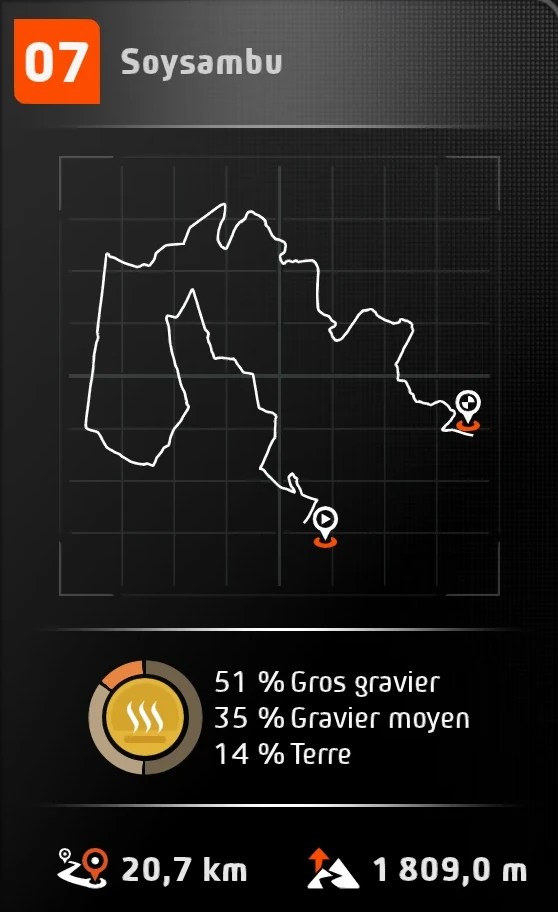
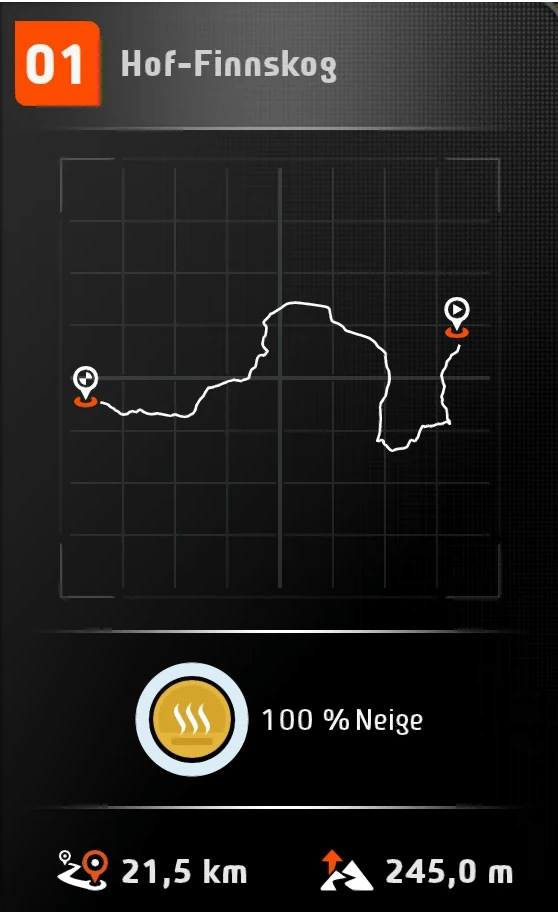
EA SPORTS™ WRC 24 | 2024.11.27 | JustForFun | Sweden | Spikbrenna | Category: World Rally Car 1997-2011 | Mitsubishi Lancer Evolution VI | 6:12.184 + Replay
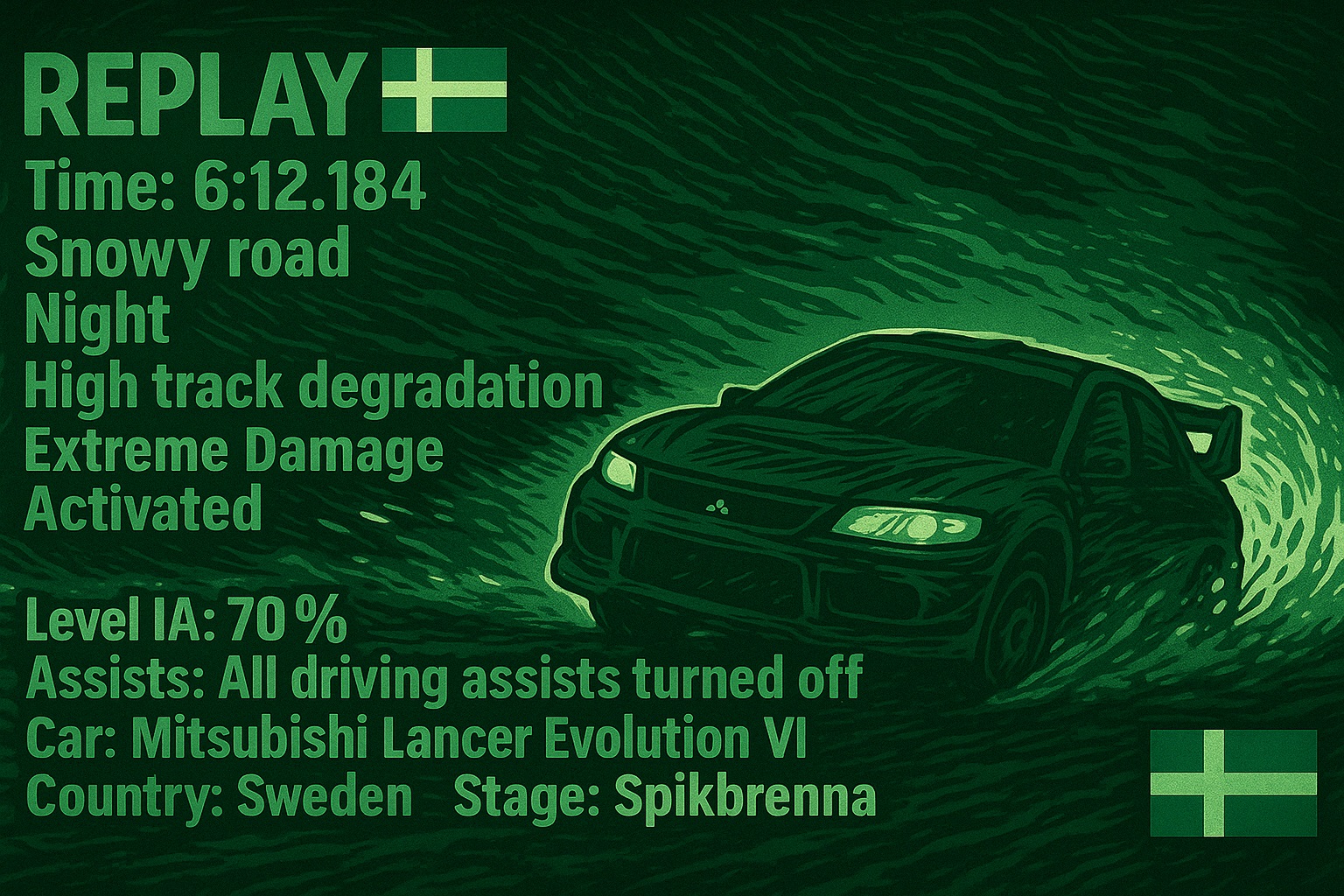
Time: 6:12.184 + ReplaySnowy roadNightHigh track degradationExtreme Damage ActivatedLevel IA: 70% Car: Mitsubishi Lancer Evolution VICountry: SwedenStage: Spikbrenna No Leaderboard. Wheel: Thrustmaster T-GT IIPedals: Thrustmaster T-LCMShifter: Thrustmaster TH8A Transmission: Manual H-pattern gearboxCamera: Cockpit / OnboardResolution: 5120×1440 Force Feedback : – Steering angle: 540° – Self-aligning torque (auto): 135 – Wheel friction: 60 – Tyre friction: 90 – Suspension: 150 – Tyre slip: 130 – Engine: 150 – Collision: 150 – No soft lock, no automatic centering.

EA Sports™ WRC 24 | 2025.04.02 | Poland | Jelonek | Category: WRC | Ford Puma Rally1 Hybride (2024) | Top 35% | Position: 528/1759 | Dry
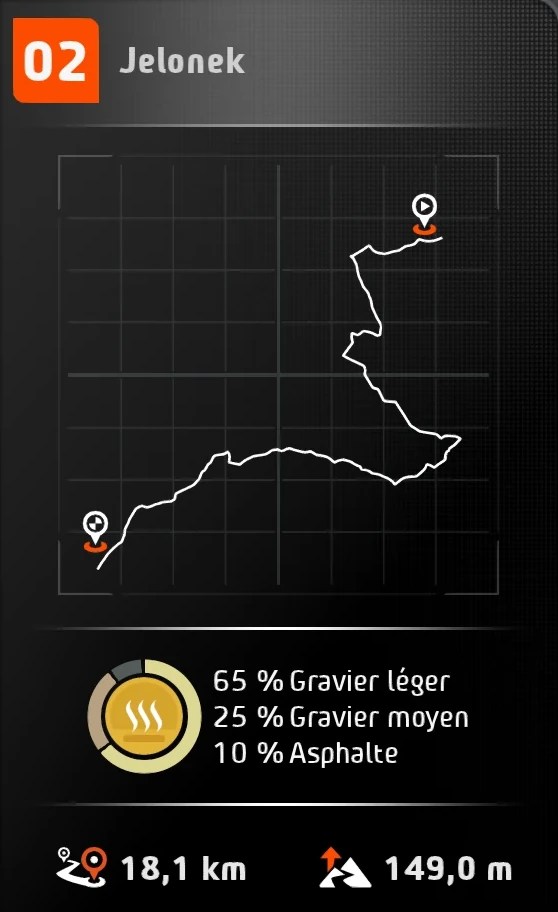
DRYTop 35%Position: 528/1759Rally: PolandStage: JelonekTime : 9:01.238 (+1:11.896)Car: Ford Puma Rally1 HYBRID (2024)Catégory: WRC Wheel: Thrustmaster T-GT IIPedals: Thrustmaster T-LCMShifter: Thrustmaster TH8A Transmission: Manual H-pattern gearboxCamera: Cockpit / OnboardResolution: 5120×1440 Force Feedback : – Steering angle: 540° – Self-aligning torque (auto): 135 – Wheel friction: 60 – Tyre friction: 90 – Suspension: 150 – Tyre slip: 130 – Engine: 150 – Collision: 150 – No soft lock, no automatic centering.

EA Sports™ WRC 24 | 2025.04.03 | Poland | Gajrowskie | Catergory: WRC | Toyota GR Yaris Rally1 HYBRID (2024) | Top 35% | Position: 1862/6197 | Dry
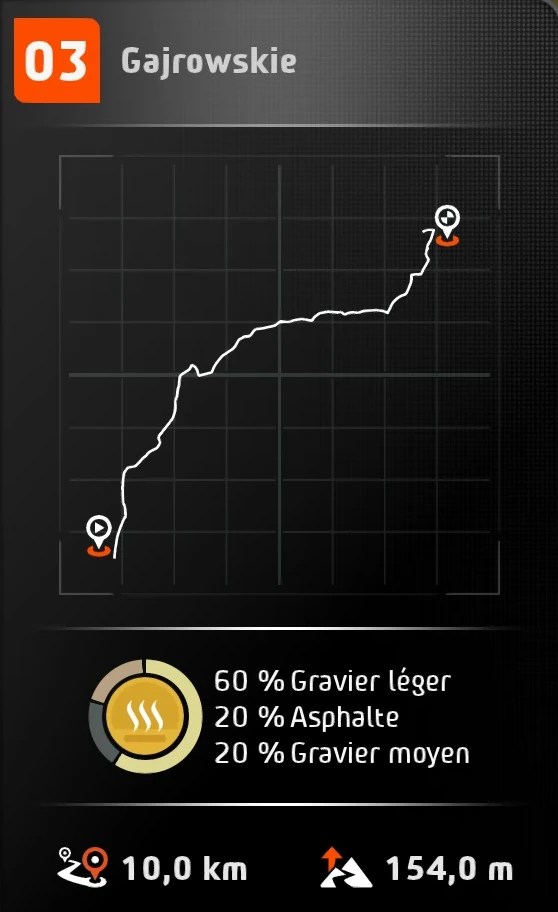
DRYTop 35%Position: 1862/6197Rally: PolandStage: GajrowskieTime : 4:54.760 (+39.177)Car: Toyota GR Yaris Rally1 HYBRID (2024)Catégory: WRC Wheel: Thrustmaster T-GT IIPedals: Thrustmaster T-LCMShifter: Thrustmaster TH8A Transmission: Manual H-pattern gearboxCamera: Cockpit / OnboardResolution: 5120×1440 Force Feedback : – Steering angle: 540° – Self-aligning torque (auto): 135 – Wheel friction: 60 – Tyre friction: 90 – Suspension: 150 – Tyre slip: 130 – Engine: 150 – Collision: 150 – No soft lock, no automatic centering.

Transparency in closures: a necessity for sustainable wine
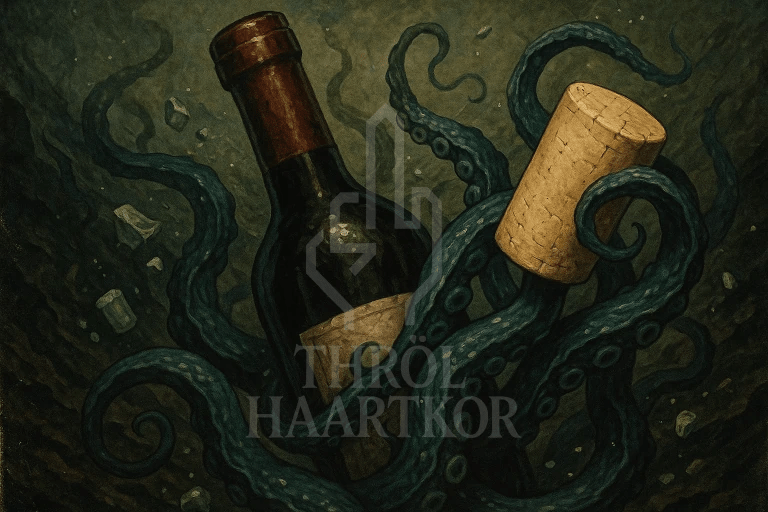
The plastic stopper, often sidelined in sustainability discussions around wine, raises crucial questions about transparency and truthfulness in labeling. Including the stopper type on wine labels could illuminate what consumers are actually buying - cutting through the greenwashed narratives that dominate the industry. Whether cork, aluminum or plastic, the stopper carries serious environmental implications, and the material choice deserves to be stated outright. By embracing this level of transparency, producers can build a more genuine relationship with their consumers - reinforcing the wine sector’s ecological commitments with actual consistency.

WCM, EFQM and ISO: It’s time to question everything

🏆 Industrial excellence? A trophy, a photo, a story. (WCM. EFQM. ISO.) Labels that validate the narrative, not the experience. What they measure: compliance. What they ignore: wear, reality, silences. No human evaluation. No lived transformation. Just a mirror held up to the public. A trophy changes nothing. It just looks pretty on the mantel. Thröl Haartkor Mk III - When you can’t listen to the teams, you collect medals.

Decoding Vinventions’ 2024 CSR Report: Truth or Spin?

Welcome to the dazzling world of Vinventions, the plastic cap champion celebrating 25 years of sustainable innovation, or more honestly, 25 years perfecting the art of recycled marketing. Their 2024 CSR report is packed with flashy stats like 73% recycled caps, but the real question is, recycled how? Pre-consumer or post-consumer? And what about that 78% “sustainable energy” claim, which could just be a heartfelt tribute to the green tint of a kilowatt? Bottom line, it is a festival of sugar-coated promises without a shred of proof for real environmental commitment. Think about it. A stoper on a problem that desperately needs a real closure.

Vinventions: Ecological Innovation or Pure Illusion?

Vinventions, the grand wizard of plastic caps, serves up a story where plastic gets cast as the new eco-hero. We’re promised “recyclable” and “carbon-neutral” products, all wrapped up in their Green Line - which, spoiler, usually ends up in the incinerator rather than any recycling bin. Like a movie star, it dazzles, but that shine covers up a much duller reality. Bottom line: with carbon neutrality floating in artistic blur and durability tests nowhere to be seen, you start to wonder if their caps are really made to stroke your conscience... or just your wine!

The Impact of Social Media on 15-Year-Old Teenagers

Ah, adolescence in the age of social media! At 15, our sweet little cherubs dive headfirst into a sea of distractions, mimicking TikTok demigods while soaking up masterclasses in cultural self-destruction. At 16, armed with their shiny new autonomy, they become connoisseurs of shots and curators of humiliating stories. And at 18? Here, take the keys to a car - because who doesn’t love mixing intoxication with tight corners? This isn’t an education policy. It’s a tragic comedy where adults, adrift in their own digital cluelessness, hand out responsibilities to teenagers like candy. What if we launched a digital detox bootcamp in the Vosges instead? Now that’s an idea.

Transparence des bouchons : une nécessité pour le vin durable

Le bouchon plastique, souvent négligé dans le discours sur la durabilité du vin, soulève des questions essentielles sur la transparence et l’honnêteté dans l'étiquetage. L’idée d’inclure le type de bouchon sur les étiquettes de vin pourrait éclairer les consommateurs sur la composition de ce qu’ils achètent, contrecarrant les récits écologiques souvent trompeurs. Le bouchon, qu'il soit en liège, en aluminium ou en plastique, a des implications significatives pour l'environnement, et le choix du matériau mérite d’être explicitement mentionné. En intégrant cette transparence, les producteurs peuvent établir une relation plus authentique avec les consommateurs, renforçant la cohérence dans l'engagement écologique du secteur viticole.

Toward a plastic-free future: change the logic

Plastic, that good old 21st-century parasite, lives on in new disguises: welcome to “bio-based plastic”! We figured swapping oil for plants might give our queens of hell a touch of dignity. Spoiler alert: plastic is still plastic, whether it comes from cornfields or crude. Basically, we slapped a green smile on a monster that refuses to die. The waste keeps piling up, and this so-called “innovation” might just be a masterclass in marketing spin. So... when do we finally break up with plastic for real?